
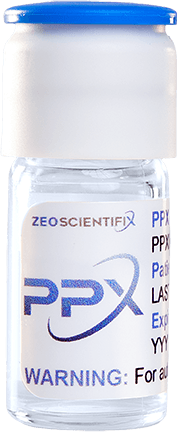
Patient Pure X begins with your own blood. Fifty-two millilitres are drawn here in the office, sent to a laboratory, concentrated over roughly ten days, and returned to us as a frozen preparation that is injected at a second visit. There is no donor, no tissue matching, and no material from anyone else's body. What you receive was made from what you gave.
What the laboratory concentrates is the platelet-derived extracellular vesicle fraction — the family of signalling particles that includes exosomes — which carries growth factors and micro-RNA. ZEO ScientifiX, which manufactures it, categorises the product as an autologous EV concentrate rather than an exosome product, and that is the more accurate description. We use the word exosome on this page because it is the term most men are searching for. Extracellular vesicle is what is actually in the vial.
This is an investigational therapy in a field that is still establishing itself. Much of the strongest supporting evidence remains preclinical, and its application in sexual medicine specifically is not settled science. We offer it as an optional advanced therapy for appropriate candidates, and we would rather say that plainly than let the packaging imply otherwise.
From Dr. Robbins' PracticeRegenerative medicine attracts a great deal more marketing than it does evidence. What I can give you is a straight account of what this product is, what is documented about it, and what isn't — and if a more established option would serve you better, I will tell you so.
Most treatments happen in a single appointment. This one does not, and the reason is the ten days in the middle. Your blood is drawn at the first visit and shipped the same day to a laboratory. The concentrate comes back roughly a week and a half later, and only then is it injected. Two visits, one preparation, and an interval that exists entirely because of where the work is done.
Fifty-two millilitres of your own peripheral blood is drawn into a closed collection device pre-loaded with sodium citrate, using a butterfly needle, with the syringe inverted throughout so the sample never begins to clot. Enrolment and chain-of-custody documentation is completed while you are with us. The sample is packed the same day into a temperature-controlled shipping system carrying two independent temperature-excursion indicators, and flown overnight to the laboratory. It is never refrigerated or frozen first.
At an FDA-registered cGMP facility, a proprietary sequence of centrifugation steps removes red blood cells and leukocytes while concentrating the platelet-derived extracellular-vesicle fraction that carries growth factors and micro-RNA. Every lot is released with a certificate of analysis detailing sterility and nanoparticle count. Your concentrate returns to us frozen on dry ice and is held in a medical-grade freezer at or below −20 °C.
Your concentrate is thawed and injected at the treatment site by Dr. Robbins. Because the material was made from your own blood, there is no donor and no question of matching. You go home the same day. Mild soreness, swelling, warmth or bruising over the following days is expected — that inflammatory response is the process the material is intended to initiate, not a complication.
This is not a preparation made at the bedside during your appointment. It is a documented lot, produced at a registered facility, released against a certificate of analysis, and shipped frozen. Whether that additional processing yields a better clinical result is not something we are in a position to claim. What we can tell you is precisely what is done, and precisely what is documented.
Draws are scheduled Monday through Wednesday only, because the sample must fly the same day it is drawn and must never sit over a weekend.
Made from your own platelets. No donor, no tissue matching, and no donor-screening question to consider.
Processed over roughly ten days at an FDA-registered cGMP facility rather than prepared during your appointment.
Each preparation is released with a certificate of analysis stating sterility and nanoparticle count for that specific lot.
It is concentrated from whatever is circulating in your blood on the morning of the draw, which makes your preparation part of the process.
The platelet-derived EV fraction — the family that includes exosomes — carrying growth factors and micro-RNA. Supplied in 100, 200 and 400 billion particle concentrations.
One fact governs the entire preparation list: whatever is circulating in your blood on the morning of the draw is what gets concentrated into your vial. An anti-inflammatory taken the week before does not simply wear off — it changes the material you are about to receive. That is why the schedule below is longer and stricter than for most procedures, and why it is not optional.
The restrictions continue after the injection for a related reason. The most common cause of a regenerative procedure underperforming is exposure to anti-inflammatory medication or corticosteroids during the healing window: NSAIDs blunt the very inflammatory cascade the material is meant to initiate.
NSAIDs such as ibuprofen and naproxen stop 5–7 days before the draw. Aspirin, including 81 mg, stops 7–10 days before — it inhibits platelet function irreversibly. Acetaminophen stops one week before.
Oral and systemic steroids stop 2–4 weeks before the draw. A local cortisone injection at the treatment site rules out the procedure for at least 6 weeks, and 3 months is preferred.
Fish oil and omega-3s, vitamin E, garlic, ginkgo, high-dose vitamin C and CBD stop 7–10 days before. Turmeric, ginger, willow bark, feverfew and boswellia stop 3–5 days before. A standard multivitamin is generally fine — check the label.
Alcohol stops 48–72 hours before, though a full week is preferred. Nicotine in every form — cigarettes, cigars, vaping, pouches, gum and patches — stops at least 2 weeks before, and longer is meaningfully better.
Eat a normal protein-containing meal, but nothing fatty within 4 hours — lipemic plasma interferes with processing. Drink at least 64 oz of water daily for the 3 days beforehand.
Prescription blood thinners — warfarin (Coumadin), apixaban (Eliquis), rivaroxaban (Xarelto) and clopidogrel (Plavix) — must never be stopped without the explicit approval of the physician who prescribed them. Bring your full medication list to your consultation and we will work through it together.
The summary above covers the substance of it. The complete schedule — every medication and supplement with its exact timing, the interval, the full aftercare protocol and the warning signs to call us about — is set out separately and is designed to be printed and kept.
Read the full preparation protocol →
Stated at the top of this page and repeated here because it matters. The laboratory is FDA-registered; the product is not FDA-approved. These are different things.
Not everyone responds. There is no threshold of improvement we can promise you, and we will not pretend otherwise to close a booking.
The washout schedule is extensive, it starts two weeks out, and it is not optional. It also comes with a firm rule about never stopping prescription blood thinners on your own.
Nothing may change for 4–8 weeks, and assessment runs out to 3–6 months. If you need something that works this month, this is not it.
We do not have a durability figure we are willing to state. Where you see confident numbers attached to therapies like this one, ask what they are based on.
No NSAIDs or aspirin for 4–6 weeks afterward. If you rely on them for another condition, raise it before you book — it may change the plan.
Because the preparation is made from your own blood and shipped to an outside laboratory, eligibility is assessed before the draw is scheduled rather than on the day. The manufacturer's criteria are firm:
Further contraindications — including active infection, a recent stroke, heart attack, DVT or pulmonary embolism, and uncontrolled clotting disorders — are reviewed individually at consultation and again during the consent process. Bring your full medical history and medication list; some of these are absolute, and it is better to find out before a draw is scheduled than after.
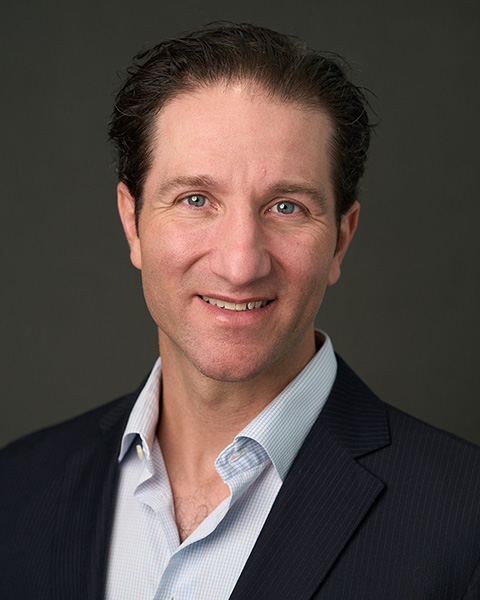
Dr. Robbins is a board-certified urologist (American Board of Urology), trained at NYU Grossman School of Medicine with Alpha Omega Alpha honours, and holds Florida medical licence ME103781.
For a two-stage therapy, who administers it matters in a specific and unglamorous way. The model only works if the practice handles it correctly at every step: eligibility screened before the draw is booked, the draw scheduled so the sample never sits over a weekend, chain-of-custody documentation completed properly, same-day shipping under temperature control, and the returned concentrate held frozen and handled correctly until the second visit. None of that is visible to you. All of it determines what ends up in the syringe.
Before anything else there is simply a conversation — a chance to go through what you have already tried, what you are hoping for, and whether this is a sensible next step. Sometimes it is. Often a more established option would serve you better, and we will say so. Given that this therapy asks for a two-week preparation, two appointments and a wait of several months to know where you stand, it is worth being sure before you begin.
Medically reviewed by Dr. David Robbins — Board-Certified Urologist, INTIMÉ Miami. Last reviewed July 26, 2026.
Patient Pure X (PPX) is made from your own blood. Fifty-two millilitres are drawn in our office and sent to an FDA-registered cGMP laboratory, where a proprietary sequence of centrifugation steps concentrates the platelet-derived extracellular vesicle fraction — the family of signalling particles that includes exosomes — carrying growth factors and micro-RNA. It is not donor-derived, it does not come from umbilical cord tissue, and it contains no stem cells. What you receive was made from what you gave.
Because the concentration is performed at an FDA-registered cGMP laboratory rather than at the bedside during your appointment. The interval is the processing and release time: the sample ships the same day it is drawn, the laboratory runs its centrifugation sequence, and each lot is released against a certificate of analysis before it is returned to us frozen. Draws are scheduled Monday through Wednesday only, so that no sample sits in transit over a weekend.
Both begin with your own blood. Platelet-rich plasma is prepared in the office during your visit. Patient Pure X is shipped to an outside laboratory and processed over roughly ten days to concentrate the platelet-derived extracellular vesicle fraction, and each lot is released with a certificate of analysis stating sterility and nanoparticle count. That is a difference in how the material is produced and documented. Whether it produces a better clinical result is not something we are in a position to claim.
Because whatever is circulating in your blood on the morning of the draw is what gets concentrated into your preparation. Anti-inflammatory medication and corticosteroids also blunt the inflammatory cascade the material is intended to initiate, which is why the restrictions continue after the injection as well. Important: prescription blood thinners such as warfarin, Eliquis, Xarelto and Plavix must never be stopped without the explicit approval of the physician who prescribed them.
No. Patient Pure X is not approved by the U.S. Food and Drug Administration. The laboratory that prepares it is FDA-registered and operates under cGMP, but registration of a facility is not approval of a product and we will not present it as one. We make no claim of proven effectiveness and offer no guarantee of result. You are encouraged to consult your primary care provider before proceeding.
If you respond, the earliest that change is typically reported is 4–8 weeks after the injection. Nothing may have changed at week three, and that is expected. Maximum benefit is typically assessed at 3–6 months. Effects may be of limited duration and additional treatments may be needed. We do not have a durability figure we are prepared to publish.
Cost depends on the protocol recommended for you and is discussed directly at consultation. Financing options are available. We would rather quote you accurately after an assessment than publish a figure that may not apply to your situation.
Comprehensive guide to erectile dysfunction causes, symptoms, and the range of treatment options available at INTIMÉ Miami.
The in-office alternative that also begins with your own blood, prepared during your visit rather than at an outside laboratory.
A Miami-focused guide to modern erectile dysfunction treatments, from regenerative therapies to lifestyle strategies.
Neither Patient Pure X nor any other ZEO ScientifiX biologic has been approved by the U.S. Food and Drug Administration. The laboratory that prepares it is FDA-registered and operates under cGMP. Registration of a facility is not approval of a product, and we will not present it as one.
We make no claim of proven effectiveness. We offer no guarantee of result, and we have no durability figure we are prepared to publish. Whether this is a reasonable option for you is a clinical judgement made individually, and you are encouraged to discuss it with your primary care physician before proceeding.